La scena prima
della scena
Before the scene,
there was a record
Soho, jazz moderno, import americani e il completo che ha inventato una generazione Soho, modern jazz, American imports and the suit that invented a generation
Prima del parka, prima degli scooter, prima di tutto: c'era un ragazzo a Soho con un disco americano che nessuno in Inghilterra aveva ancora sentito.
Il grigio che precede il colore
Londra, autunno 1958. Tredici anni dopo la fine della guerra, la città è ancora una ferita aperta. I lotti vuoti del Blitz punteggiano Stepney e Hackney come denti mancanti. Il razionamento alimentare è finito solo nel 1954, e la memoria della privazione è ancora corporea, incisa nella postura di chi ha più di trent'anni. La Gran Bretagna ha vinto la guerra e perso l'impero, e non sa ancora bene cosa fare di entrambe le cose.
La cultura ufficiale riflette questa incertezza. La BBC suona musica da ballo. I negozi di abbigliamento vendono completi grigi, marroni, blu navy — taglio largo, giacca lunga, pantaloni ampi. I Teddy Boys protestano a modo loro con il drape coat eduardiano e i capelli impomatati a banana: è una ribellione, ma è una ribellione che guarda indietro, non in avanti.
Poi c'è Soho. Mezzo chilometro quadrato nel cuore del West End che non obbedisce alle regole del resto della città. Immigrati italiani, greci, ungheresi fuggiti nel '56. Old Compton Street odora di caffè e salamoia. È l'unico posto in Inghilterra dove nel 1958 puoi bere un caffè fatto come si deve.
È qui che tutto comincia.
I coffee bar e il suono che arriva dall'America
Il 2i's Coffee Bar al 59 di Old Compton Street apre nel 1956 e diventa in due anni il centro gravitazionale di un certo tipo di gioventù londinese — non la massa, ma i curiosi, i già-formati, la tribù in costruzione. A duecento metri, in Wardour Street: il Flamingo Club. Apre la notte, chiude all'alba. Il pubblico è misto in un modo che nel 1958 a Londra è ancora insolito: musicisti jazz bianchi, immigrati delle Indie Occidentali, soldati americani, ragazzi della working class che non vogliono niente di ciò che offre la cultura ufficiale. Il Flamingo suona R&B americano — Ray Charles, Jimmy Smith, Mose Allison — importato dagli Stati Uniti attraverso canali spesso non del tutto legali.
La parola "Mod" deriva da "Modern" — come in Modern Jazz. I primi Mod non si chiamavano così: erano ragazzi interessati al jazz moderno, al bebop, al cool, al suono che arrivava dall'America su dischi che costavano il doppio degli LP britannici e bisognava cercare con pazienza nei negozi specializzati di Soho.
«Essere Mod, nella sua forma originale, significava essere un conoscitore. Sapere cose che gli altri non sapevano. Il vinile non era un accessorio della sottocultura Mod: era la sottocultura Mod.»
Grooville — Serie Mod, Capitolo IGuy Stevens e l'arte di scegliere i dischi
Nessuno incarna meglio questa etica di Guy Stevens — e quasi nessuno ne parla abbastanza. Stevens nasce nel 1943, cresce a Londra, e a diciassette anni è già uno degli import hunter più accaniti della città. Non è un musicista: è un ascoltatore, un curatore, un ossesso. Ogni sabato sera fa il DJ allo Scene Club di Ham Yard — uno scantinato sotto un parcheggio a due passi da Piccadilly Circus — con una collezione di dischi che non esiste da nessun'altra parte in Inghilterra.
Il modello del DJ come figura centrale di una sottocultura nasce qui, in questo seminterrato, prima ancora che la parola "DJ" avesse il significato che ha oggi. Stevens non miscela: mette sul piatto un 45 giri, aspetta che finisca, ne mette un altro. Ma la sequenza è studiata con la precisione che oggi chiameremmo curation — ogni brano scelto perché dice qualcosa che il precedente non ha detto.
Il repertorio: soul di Memphis, R&B di New Orleans, jazz di Chicago, gospel travestito da blues. Musica che la BBC ignorava completamente. Messaggi in bottiglia dall'altra parte dell'Atlantico. Stevens produrrà London Calling nel 1979. Il suo vero capolavoro erano quelle serate a Ham Yard, dove ha insegnato a una generazione di Mod come si ascolta.
I dischi che hanno costruito un'identità
Miles Davis — Kind of Blue (Columbia CL 1355, 1959)
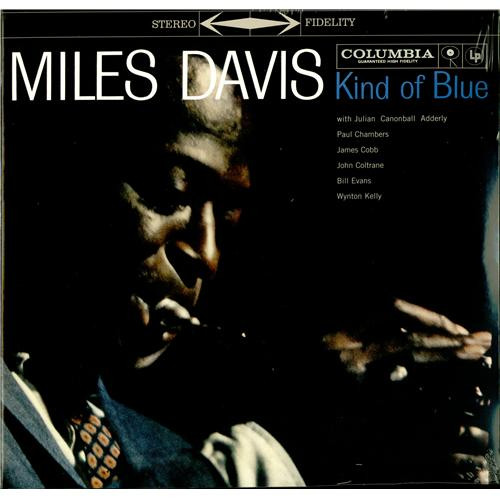
Il punto di partenza assoluto. Non il più energico né il più complesso: il più completamente se stesso. So What apre con il basso che cammina da solo per quarantotto battute, e quando Davis entra con la tromba sordina la nota sale come fumo in una stanza chiusa. Nessuno corre. Quella compostezza — quel cool — è esattamente ciò che i Mod sentono come opposto di tutto il resto.
Originale mono "six-eye" Columbia CL 1355 sopra i 300€ — cerca matrix "1A/1A" nel deadwax per il primo pressing. Mobile Fidelity MFSL 2-45011 (doppio 45 RPM, 180g) è il riferimento audiofilo moderno. Il Columbia Legacy 1997 è la scelta accessibile.
Jimmy Smith — The Sermon! (Blue Note 4011, 1958)
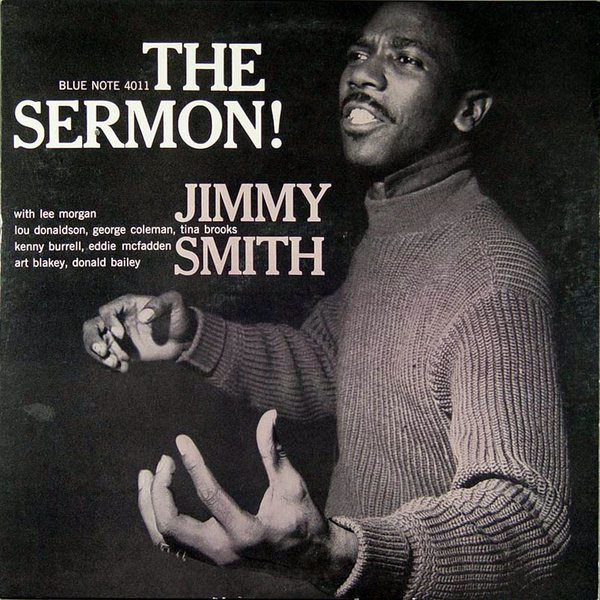
L'Hammond B3 come strumento groove — la dichiarazione definitiva di Smith. La title track dura sedici minuti e non ne spreca uno. Lee Morgan alla tromba. Art Blakey alla batteria. La mano sinistra tiene la linea di basso, la destra costruisce accordi spessi come malto, e la voce dell'organo porta una saturazione calda che nessun altro strumento produce. Questo è quello che il Flamingo suonava alle tre di notte per un pubblico senza intenzione di tornare a casa.
Blue Note 4011 originale New York (indirizzo 47 W. 63rd St, incisione RVG) sopra i 280€. Blue Note Classic Vinyl Series 2021 (180g, half-speed Kevin Gray) è la ristampa moderna più onesta.
Mose Allison — Back Country Suite (Prestige 7121, 1957)
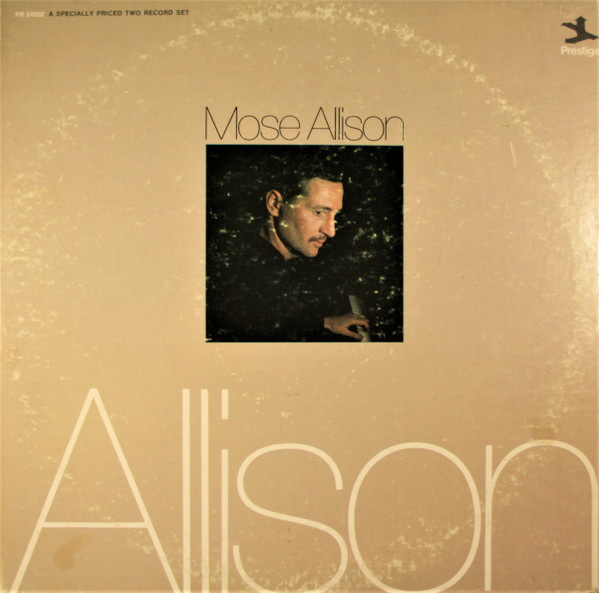
L'anello mancante tra jazz e blues. Allison è di Tippo, Mississippi: parla come un contadino del Delta e suona come un jazzista di New York. La sua voce ha la qualità distaccata di qualcuno che ha visto tutto e non si impressiona più di niente — un'attitudine che i Mod riconosceranno immediatamente come propria.
Prestige originale mono (etichetta gialla, incisione Van Gelder) tra 60 e 150€. Prestige Original Jazz Classics è l'alternativa accessibile.
Oliver Nelson — The Blues and the Abstract Truth (Impulse! A-5, 1961)
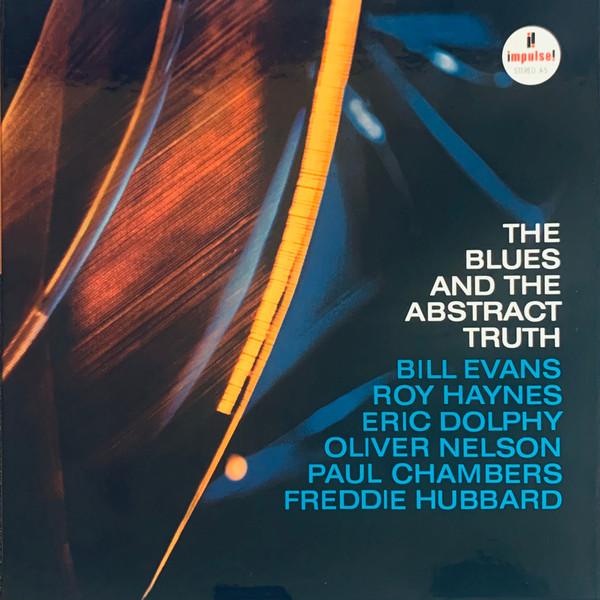
Uno dei dischi che meglio spiega cosa stavano ascoltando i Mod alle due di notte al Flamingo. Sezione fiati di sette elementi che include Eric Dolphy al sax alto e Bill Evans al pianoforte. Stolen Moments — il pezzo d'apertura, sei minuti e mezzo — è un blues modale che si muove con la stessa compostezza notturna che i Mod cercavano nei loro vestiti, nei loro club, nel loro modo di ascoltare. Non è un disco da ballare. È un disco da rimanere svegli ad ascoltare.
Originale Impulse! A-5 mono con copertina apribile arancione/nera tra 80 e 200€ in VG+. La ristampa Analogue Productions APP 005 (2019, 45 RPM doppio LP) è il riferimento audiofilo moderno.
Il vestito come atto politico
La musica era il contenuto. Il vestito era la forma. Per capire perché un diciassettenne nel 1959 spendeva quattro settimane di salario da un sarto di Soho, bisogna capire cosa significava vestirsi in Inghilterra allora.
Il guardaroba maschile britannico del dopoguerra era una dichiarazione di resa. Il lounge suit standard — taglio ampio, due bottoni, spalle imbottite — era progettato per non distinguersi. I Teddy Boys avevano provato a rompere questa uniformità rispolverando l'eleganza eduardiana, ma la loro ribellione era nostalgica: guardava al passato.
I Mod guardavano a sud. All'Italia. Il cinema neorealista di Fellini, Antonioni, De Sica era arrivato nelle sale d'essai di Londra a metà degli anni Cinquanta, e i Mod avevano notato come si muovevano gli uomini in quei film. Non rigidi, non deferenti: precisi. La giacca italiana a tre bottoni, revers stretto, spalla pulita senza imbottitura, lunghezza più corta — un vestito che dichiarava la forma del corpo invece di nasconderla.
Il completo Mod canonico, 1959–62: giacca a tre bottoni con revers stretto e alto ("high gorge"), pantaloni a vita alta rastremati senza risvolto, mohair o fresco di lana. Colori: grigio ardesia, blu notte, marrone tabacco. Cravatta: un centimetro e mezzo, nodo stretto. Scarpe: winklepicker. Capelli corti, riga laterale precisa. Il barbiere italiano del quartiere, non quello del paese. Ogni elemento una scelta deliberata. Ricerca, conoscenza, spesa. Esattamente come trovare il pressing giusto di un import americano.
La convergenza
Verso il 1961, qualcosa si cristallizza. I ragazzi che vanno al Flamingo e allo Scene Club e comprano import da Dobell's cominciano a riconoscersi anche nell'aspetto. Nessun manifesto. Nessun capo ufficiale. Ma le stesse premesse culturali producono le stesse scelte estetiche. Chi ascolta jazz moderno invece di pop da classifica, cerca pressing americani invece di Cliff Richard, beve espresso invece di tè: questa persona veste in un modo specifico.
Essere Mod significava essere moderno. Non nel senso vago di "al passo con i tempi" — nel senso preciso, quasi tecnico del termine. Moderna era la musica di Miles Davis rispetto a Louis Armstrong. Moderno era il taglio italiano rispetto al drape coat eduardiano. Moderno era l'espresso rispetto al tè.
Ogni scelta era una presa di posizione. E tutto è cominciato da un ragazzo a Soho con un disco americano che nessuno in Inghilterra aveva ancora sentito.
Before the scooters. Before the parkas and the bank holiday punch-ups and Pete Townshend smashing his first guitar. Before any of that: a boy in a Soho basement with an American record nobody in England has heard.
Grey
Soho, late 1958. Half a square mile between Oxford Street and Shaftesbury Avenue. Italian delicatessens on Old Compton Street. Coffee bars with Gaggia machines that actually work, run by people who know what coffee is supposed to taste like. Britain in 1958 is still convalescing. The Blitz left gaps in the East End streetscape — lots where houses stood, fenced off with corrugated iron. Food rationing ended in 1954 and the memory of it is in people's posture. Suez was two years ago, the humiliation still raw, the empire dissolving on cue. The BBC plays Joe Loss. The menswear shops sell grey, brown, navy — broad cut, padded shoulder, wide trouser.
The Teddy Boys tried to break this with Edwardian fancy dress — drape coat, velvet collar, banana quiff, winklepicker shoe. A rebellion, yes. But a backward-looking one. The Fifties, not the Sixties. Soho doesn't get the memo.
The Sound
The 2i's Coffee Bar at 59 Old Compton Street opens in 1956 and becomes in two years the centre of gravity for a particular kind of London youth. Not the mainstream — the specific, the already-forming, the tribe that doesn't know it's a tribe yet. Two hundred yards away, in Wardour Street: the Flamingo Club. Midnight opening, dawn closing. The crowd is mixed in a way that 1958 London rarely manages. The Flamingo doesn't play skiffle. It plays American R&B — Ray Charles, Jimmy Smith, Mose Allison — brought over from the States through channels that weren't always strictly legal.
The word "Mod" comes from "Modern." As in Modern Jazz. The first Mods don't call themselves anything: they're simply boys interested in modern jazz, in bebop, in cool — in the sound coming from America on records that cost twice the price of a British LP and had to be hunted down in the specialist shops of Soho.
To be Mod was to be a connoisseur. It meant knowing things others didn't know. Vinyl wasn't an accessory of Mod subculture — it was Mod subculture.
Grooville — The Mod Story, Chapter IGuy Stevens
No one embodies this ethic better than Guy Stevens, and almost no one talks about him enough. Born 1943. By seventeen he's already one of the most obsessive import hunters in London. Not a musician — a listener, a curator, a fanatic in the best sense. He works the decks at the Scene Club in Ham Yard, a basement under a car park two minutes from Piccadilly Circus, Saturday nights, with a record collection that exists nowhere else in England.
The model of the DJ as the central figure of a subculture — the man who chooses the music, sets the pace, decides what's cool — starts here, in this basement, before the word "DJ" has acquired its modern meaning. Stevens doesn't mix. He puts a 45 on the turntable, waits for it to end, puts on another. But the sequence is calibrated with a precision we'd now call curation.
Memphis soul. New Orleans R&B. Chicago jazz. Gospel dressed as blues. Music that BBC Radio ignores entirely. Records arriving like messages in bottles from the other side of the Atlantic. Stevens would go on to produce London Calling in 1979. His real masterpiece was those Saturday nights at Ham Yard, teaching a generation of Mods how to listen.
The Records
Miles Davis — Kind of Blue (Columbia CL 1355, 1959)
The starting point, full stop. Not the most technically complex or the most energetically demanding — the most completely itself. So What opens with bass walking alone for forty-eight bars, and when Davis comes in with the muted horn the note rises like smoke in a closed room. Nobody is racing anyone. That composure — that cool — is exactly what the Mods hear as the opposite of everything around them.
The original mono "six-eye" Columbia CL 1355 is the reference — look for matrix "1A/1A" in the dead wax. Above £300 for a clean copy. The Mobile Fidelity 45 RPM double LP (MFSL 2-45011) is the serious modern alternative.
Jimmy Smith — The Sermon! (Blue Note 4011, 1958)
The Hammond organ as groove instrument — Smith's definitive statement on the matter. The title track runs sixteen minutes and doesn't waste a second of them. Lee Morgan on trumpet. Art Blakey on drums. The left hand holds the bass line, the right hand builds chords thick as malt. This is what the Flamingo played at 3 AM for a crowd with no intention of going home.
The Blue Note 4011 original New York pressing (Rudy Van Gelder, "RVG" in the dead wax) above £280. The 2021 Blue Note Classic Vinyl Series half-speed reissue is the honest modern alternative.
Mose Allison — Back Country Suite (Prestige 7121, 1957)
Tippo, Mississippi. Piano. Jazz. Blues. The missing link. Allison talks like a Delta farmer and plays like a New York modernist, and his voice carries the detached irony of someone who has seen everything and is beyond surprise. The Mods recognise this immediately. Parchman Farm will become a Mod standard. The Who will be doing this thing to British R&B within five years.
Original Prestige mono (yellow label, "RVG" dead wax) between £60 and £150. Prestige Original Jazz Classics reissue is the accessible alternative.
Oliver Nelson — The Blues and the Abstract Truth (Impulse! A-5, 1961)
Maybe the record that explains best what the Mods were listening to at two in the morning at the Flamingo. Seven-piece horn section including Eric Dolphy on alto and Bill Evans on piano. Stolen Moments — six and a half minutes opening the album — is a modal blues that moves with the same nocturnal composure the Mods were after in their clothes, their clubs, their way of listening. Not a record to dance to. A record to stay awake and listen to.
Original Impulse! A-5 mono with the orange/black gatefold sleeve runs £80–200 in VG+. The Analogue Productions APP 005 (2019, 45 RPM double LP) is the modern audiophile reference.
The Suit
The music was the content. The suit was the form. To understand why a seventeen-year-old in 1959 spent four weeks' wages at a Soho tailor, you need to understand what getting dressed meant in England then.
The British male wardrobe of the postwar period: the lounge suit. Broad cut. Two buttons. Padded shoulders. Designed not to stand out. Deference made visible. The Teds had tried to break this with Edwardian revival — drape coat, velvet collar — but their rebellion looked backwards. The Mods looked south. Italy.
Italian neorealist cinema had been arriving in London's art houses since the mid-Fifties. Fellini, Antonioni, De Sica. Men who moved differently — not stiff, not deferential. Precise. The Italian jacket: three buttons, narrow high lapel, clean unpadded shoulder, shorter length. A garment that allowed the body to move.
The canonical Mod suit, 1959–62: three-button jacket, high gorge lapel, no back vent, high-waisted trousers tapered without turn-ups, mohair or worsted wool. Colours: slate grey, midnight blue, tobacco brown. Tie: one and a half centimetres wide. Small tight knot. Shoes: winklepicker, pointed toe, Cuban heel, thin sole. Hair: short, clean side parting. Every element a deliberate choice. Knowledge, research, expenditure. Exactly like finding the right pressing of an American import.
The Convergence
Around 1961, something crystallises. The boys going to the Flamingo and the Scene Club and buying imports at Dobell's start recognising each other on sight. No manifesto. No official figurehead. But the same cultural premises produce the same aesthetic choices. Whoever listens to modern jazz rather than chart pop, seeks American pressings rather than domestic Cliff Richard, drinks espresso rather than tea — this person dresses in a specific way. The three-button suit is the logical consequence of a worldview, not a fashion separate from the music.
To be Mod was to be modern. Not vaguely "with it" — precisely, almost technically, modern. Modern was Miles Davis against Louis Armstrong. Modern was the Italian cut against the Edwardian drape. Modern was espresso against tea. Every choice a position. And it all begins here: a boy in a Soho basement with an American record nobody in England has heard yet.
I dischi di questo capitoloRecords of this chapter
GUIDA ALL'ACQUISTO · PRESSING CONSIGLIATI · LINK AFFILIATIBUYING GUIDE · RECOMMENDED PRESSINGS · AFFILIATE LINKS
La storia del Mod non è la storia di una moda. È la storia di un'epistemologia — di un modo di sapere, di un modo di scegliere, di un modo di costruire identità attraverso oggetti selezionati con cura. Il disco giusto. Il tessuto giusto. Il pressing giusto.
Soho tra il 1958 e il 1962 è il laboratorio dove questa epistemologia prende forma. Quello che viene dopo — gli scooter, i parka, Carnaby Street, The Who — è la conseguenza di quello che è successo in questo scantinato, in questo negozio di dischi, davanti a questo sarto italiano.
The story of Mod is not the story of a fashion. It's the story of an epistemology — a way of knowing, a way of choosing, a way of building identity through carefully selected objects. The right record. The right fabric. The right pressing.
Soho between 1958 and 1962 is the laboratory where this epistemology takes shape. What comes after — the scooters, the parkas, Carnaby Street, The Who — is the consequence of what happened in this basement, in this record shop, in front of this Italian tailor.