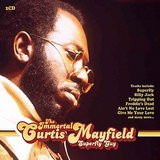
Estate 1972. Il cinema blaxploitation stava costruendo i suoi eroi nello stesso momento in cui le comunità afroamericane li pagavano il prezzo più alto: Shaft, Sweetback, e ora Priest — il dealer elegante di Superfly, il film di Gordon Parks Jr. destinato a diventare un fenomeno da botteghino. Le major del cinema volevano musica all'altezza dell'immagine: glamour, forza, groove da vendere insieme ai poster. Curtis Mayfield prese la sceneggiatura, qualche girato grezzo, e fece l'opposto. Registrò un disco che non celebra Priest — lo compiange, lo giudica, lo mette sotto processo con la stessa delicatezza con cui un falsetto può fare più male di un pugno.
La scelta del falsetto non è mai stata innocente, in Mayfield. Da The Impressions in poi, quella voce alta e sottile aveva sempre portato con sé un'idea precisa: la vulnerabilità come forma di dignità, non di debolezza. Su Superfly quella scelta diventa dichiarazione politica. Pusherman — quattro minuti e quaranta di basso grasso e archi che scivolano come seta su vetro — descrive il pusher come una trappola, non come un modello. Mayfield non canta con ammirazione: canta con la lucidità di chi ha visto cosa succede dopo. Freddie's Dead arriva subito dopo, con quegli ottoni sincopati e quella ritmica spezzata che sembrava un lamento mascherato da danza, e racconta la fine obbligata di una storia che il film stava vendendo come gloriosa. Il testo è un epitaffio, non un inno. Sul lato B, la title track Super Fly chiude il cerchio: groove incontenibile, arrangiamento di Johnny Pate che trasforma ogni singolo strumento in un elemento narrativo, Mayfield che canta sopra tutto come se stesse parlando da un posto molto più in alto del marciapiede.
Il pressing originale Curtom (CRS 8014-ST, 1972, etichetta arancione e bianca, distribuzione Buddah) è il riferimento storico e si difende ancora benissimo: i bassi di Joseph Scott hanno corpo e presenza, gli archi di Pate hanno una morbidezza che i sistemi analogici dell'epoca restituivano meglio di qualunque digitale. Le copie in buone condizioni si trovano su Discogs tra i 20 e i 60 euro. Le ristampe Warner Bros./Curtom degli anni centrali del decennio sono sostanzialmente equivalenti per qualità sonora. Il riferimento moderno è la ristampa Rhino/Curtom del 2014, disponibile anche su 180g: mastering pulito, bassi con più definizione senza perdere il calore analogico dell'originale, superficie silenziosa che lascia emergere il microdettaglio degli archi — in particolare nelle transizioni tra le sezioni orchestrali di Super Fly, che sulle presse usurate tendevano a comprimersi.
Superfly è uno di quei dischi che sopravvivono al contesto per cui sono stati creati. Il film è datato; la musica non lo è, perché parla di qualcosa che il film si rifiutava di guardare in faccia. Non è la prima volta che una colonna sonora supera il film in questione — ma raramente la distanza critica tra le due opere è così deliberata e così precisa. Il brano imperdibile è Pusherman: due minuti dopo che è entrato nelle casse, smettete di leggere qualsiasi scheda tecnica e ascoltate soltanto.
Curtis Mayfield wrote Superfly before the film was finished. He worked from the script and rough cuts — and what he chose to write was a sustained moral argument against his own protagonist.
The film presents Priest, the dealer, as an aspirational figure: tailored coats, white Cadillac, the street as stage. Mayfield's music refuses this. Pusherman — built on a bass line that moves like something trying not to be seen, Johnny Pate's strings floating above it like smoke — is not an admiring portrait. It is a diagnosis. Four minutes forty seconds of groove so precisely constructed it functions simultaneously as pleasure and indictment. Freddie's Dead follows immediately, those staccato brass stabs and fractured rhythm working like a lament dressed up as a dance. The lyric is an epitaph, not a celebration. By the time Super Fly closes Side B — that groove erupting with something that sounds almost like joy until you listen to what Mayfield is actually saying — the record has done something the film cannot: it has shown the cost.
The falsetto is never innocent in Mayfield's work. Since The Impressions, that high, precise voice had always carried a specific argument: vulnerability as dignity rather than weakness. On Superfly it becomes a political instrument. You cannot sing about a pusher in falsetto and intend admiration. The emotional register does not allow it. The tension between the beauty of the sound and the weight of the subject is where this record lives.
On vinyl, the original Curtom pressing (CRS 8014-ST, 1972, orange and white label, Buddah distribution) sounds genuinely excellent: Joseph Scott's bass has presence and weight without bloom, Pate's orchestrations carry the warmth that analogue mastering of the period handled better than anything digital. Clean VG+ copies surface on Discogs between twenty and sixty euros — worth the search. Mid-decade Warner Bros./Curtom represses are essentially equivalent. The modern reference is the 2014 Rhino/Curtom reissue, available on 180g: tighter mastering, better-defined bass, a quieter surface that allows the inner detail of the string writing — especially in the transitions inside Super Fly — to come through in a way worn original pressings tend to compress.
Fifty years on, the film is a period piece. The music is not. That is because Mayfield chose to write about what the film was selling rather than join in the selling of it. Start with Pusherman. Everything follows from there.
La colonna sonora che ha indagato il film invece di illustrarlo. Cercate l'originale Curtom arancione per il documento storico, la Rhino 2014 su 180g per il suono migliore. Pusherman da sola vale il prezzo del vinile.
The soundtrack that chose to interrogate its film rather than serve it. Original Curtom pressing for the document; the 2014 Rhino 180g for the sound. Pusherman alone is worth the price of admission.